



About us
Crown Ridge Group bridges strategy and execution in the Workday ecosystem.
Explore morePhone
704.989.7085

.svg)
HR technology investments fail when adoption lags. CRG outlines how to build team confidence and maximize your Workday platform ROI starting from day one.
.webp)
Damien Benson is the founder of Crown Ridge Group and a Workday Pro Certified consultant with 10+ years of HR technology experience across HCM, Payroll, and Security.
The confidence gap in HR technology investments is real and it shows up in predictable ways. Leadership questions the ROI. Managers complain that the system makes their jobs harder rather than easier. The HR team spends time on workarounds and manual corrections that the system was supposed to eliminate. Requests for new features are met with skepticism because the existing features are not working well.
Rebuilding confidence requires addressing the root causes of the gap, not making the case for the platform in presentations. The confidence comes from the system working well, not from advocacy.
The first step is an accurate current-state picture. This means identifying which capabilities are configured and working as designed, which are configured incorrectly, which are licensed but not implemented, and which are not being used because adoption failed rather than because the feature does not work. This assessment often surfaces that a significant portion of the platform capability the organization paid for has never been activated.
The assessment also identifies where the implementation created technical debt: configurations that worked at go-live but have not been maintained, integrations that are fragile or out of date, and business process designs that were built for the organization as it existed two years ago rather than the organization as it exists today.

Most organizations that feel like their Workday investment is underperforming are using a narrow subset of the platform. Workday HCM includes robust tools for workforce planning, talent management, compensation benchmarking, and advanced reporting that many organizations have never configured. Activating these capabilities often requires less effort than anticipated and delivers immediate visibility improvements that leadership can see.
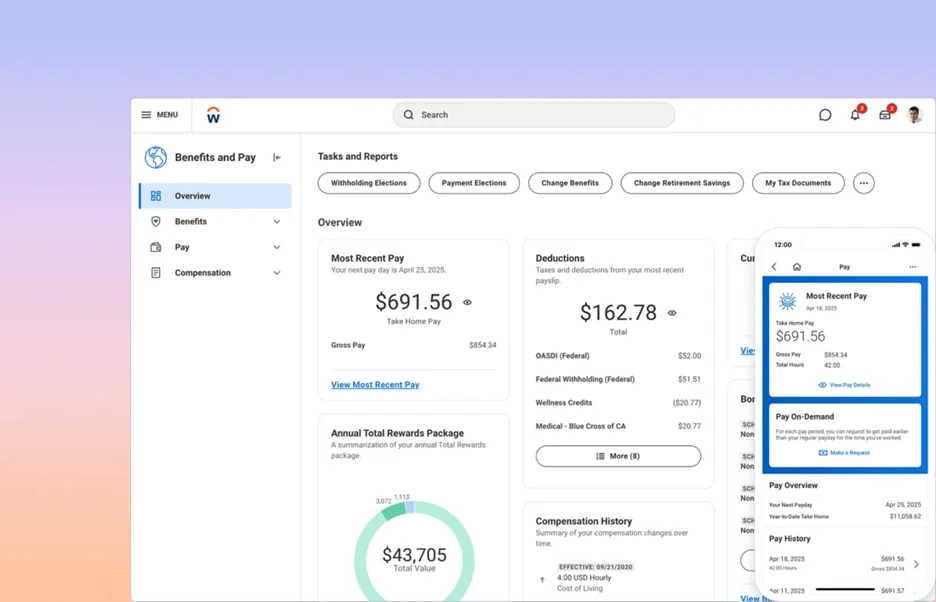
Workday analytics and dashboards are consistently the highest-value activation opportunity for organizations past the first year on the platform. When HR leaders can show business partners headcount trends, attrition risk, compensation equity analysis, and performance distribution data in real time, the perception of the HR function shifts. The technology becomes a strategic asset rather than an administrative system.
Adoption failures are not solved by more training. They are solved by understanding why adoption failed and addressing that specific cause. Common causes include business processes that are harder in Workday than the manual alternative, self-service configurations that do not match how managers actually work, and insufficient manager enablement at go-live that was never revisited.
The fix for each of these is different. Process problems require process redesign and configuration changes. Self-service problems require UX review and workflow adjustment. Manager enablement gaps require targeted, role-specific training built around the actual tasks managers perform in Workday. Generic system training that covers features rather than workflows consistently fails to move adoption metrics.
Building confidence with leadership requires demonstrating value in terms leadership cares about: time saved, error rate reduction, compliance risk reduction, data quality improvement, and speed of decision-making. Organizations that can show a before-and-after picture of these metrics have a much easier time securing ongoing investment in HR technology and HR capability.
CRG helps organizations build the measurement framework alongside the technical improvements, so that every optimization is accompanied by the evidence of its impact. Let's build a plan that demonstrates your HR technology ROI.